
About JDEC
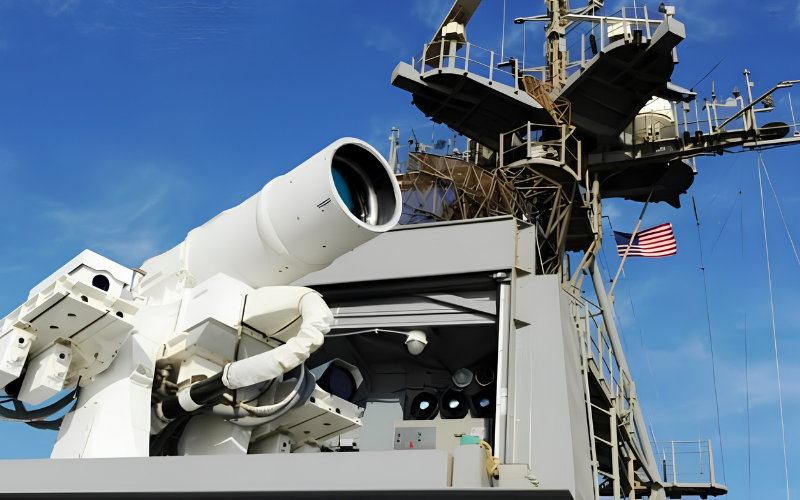
The Joint Directed Energy Consortium (JDEC), established in 2026 and powered by NSTXL, serves as the primary Other Transaction (OT) agreement vehicle for the Office of the Under Secretary of War for Research and Engineering, Critical Technologies, Scaled Directed Energy (OUSW R&E (CT) SCADE), advancing critical mission areas in directed energy and related technologies. Recognized as a Critical Technology Area (CTA), JDEC drives innovation at the tactical edge, focused on scaling high-energy lasers and microwave technologies to provide low-cost, high-impact solutions against emerging threats.
Go Further With OTAs
From advancing directed energy capabilities to strengthening domestic innovation ecosystems, the JDEC OTA is reimagining what’s possible. The JDEC team offers unmatched service with 24/7 member support, project success, networking events, teaming opportunities such as Innovator NETWORX and Industry Days, and much more.
Benefits of Using an OTA
OTAs provide flexible teaming and rapid acquisition pathways, allowing Government, industry, and academia to collaboratively research, prototype, experiment, test, evaluation, and scale solutions, from early-stage exploration through advanced development and follow-on production. Using an OTA reduces risk and accelerates the transition of innovative capabilities into operational use.

Lower Barriers to Entry
Creates pathways for non-traditional vendors and small businesses to participate in national defense projects.

Rapid Acquisition
Accelerates next-gen tech by leveraging multiple authorities for research, prototyping, and experimentation.

Innovative Partnerships
Fosters collaboration across government, industry, academia, and allied international partners to deliver defense capabilities.

Follow-On Production
Enables a seamless transition to production, allowing solutions to scale and be deployed to meet mission needs.
Strategic Superiority Starts with American Innovation
The Joint Directed Energy Consortium (JDEC) accelerates the development, integration, and fielding of advanced directed energy capabilities in support of national defense priorities. JDEC serves to unite government, industry, academia, allied international partners, and nontraditional innovators to rapidly deliver scalable directed energy technologies that enhance operational readiness, strengthen deterrence, and provide cost-effective solutions against evolving threats.
Our Program Areas
These technology areas represent the core focus areas of the Joint Directed Energy Consortium. They provide a framework for organizing research, development, and collaboration across government, industry, academia, allied international partners, and nontraditional innovators to accelerate the development, maturation, and transition of directed energy capabilities.

JDEC Mission Areas
- Non-Kinetic Strike
- Directed Energy Counter Uncrewed Aircraft Systems (DEcUAS)
- Counter Cruise Missile
- Counter-C5ISRT
- Integrated Air and Missile Defense (IAMD)
- Special Operations
- Expeditionary
- Intermediate Force Capabilities
Powered by NSTXL, Built for Mission Success
JDEC is managed by National Security Technology Accelerator (NSTXL), a proven OTA consortium leader driving innovation, speed, and impact across the national security space. Interested in becoming a member?